|
Top of the World Highway - Heading to the
Yukon, Canada |
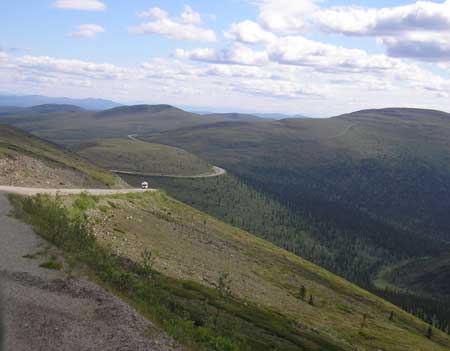
While driving the "Top of the World Highway" for some reason it
felt like you were on top of the world. |
|
Dawson City - Yukon - Canada |
| Sunday, July 2, 2006. We are in
Dawson City and
it is so much fun. There is always something going on. The visitors
center has deals on site seeing. I would say this is a must to visit.
Love it here. Denis also has gold fever. He wants to spend his summers
here looking for gold. We also met up with our friends Judy and
Pierre, of all places to meet. His brother Rejean and Sylvie were visiting with them. |
|

A view of Dawson City along the Yukon River and the
Klondike mining
area to the left. |
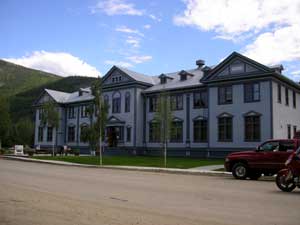
This was the Territory Building when Dawson was the Capitol. It is
now a Great Museum that gives a good idea why there was such a good
deposit of gold in the region.. I learnt to do "Gold Panning" here. |
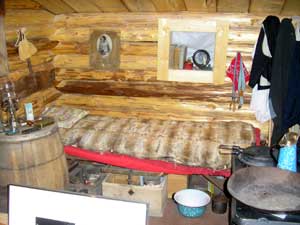
This shows how people were living during the gold rush.
|
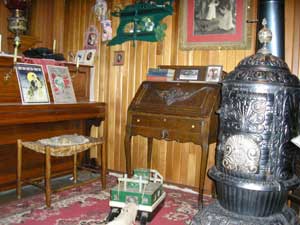
This shows what people had after the gold rush.
|
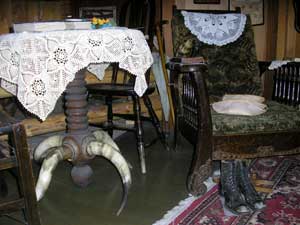
After the gold rush. |
You have to remember that Dawson City use to be the Territorial
Headquarters at one time. Now it is Whitehorse. So some of the building
are amazing.
Dawson City was 30,000 strong in its hay day now it's about 1,800.
They were almost a ghost town in the 60's... 600-800 pop. The pictures were sad. To
be so grand and then a near nothing. Pierre Burton's from here. |
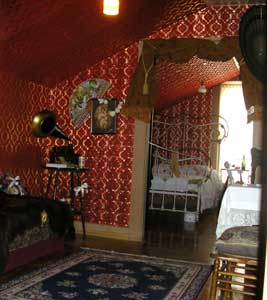
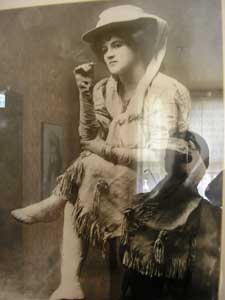
This was the Grand Palace powder room for their star lady performers. |
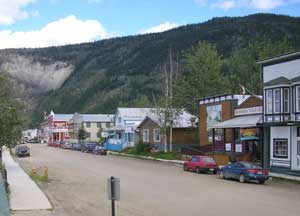
There are also some really neat stores here. They don't pave the
roads and the sidewalks are wooden, just like the old days.
Denis feels that the streets were paved with gold in 1896. There is
gold in nearly all the stores but it is for sale, gold nuggets. |
|
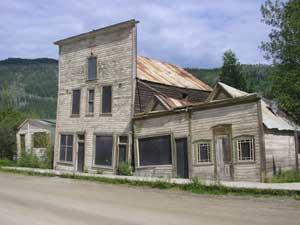
Because of the "Permafrost" you really have to know how to build a
house here. This is what happens when the frost melts away...
you sink! |
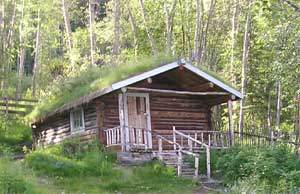
This is a log cabin that Robert Service wrote poems in, about the
Klondike Gold Rush. I have enjoyed reading them. |
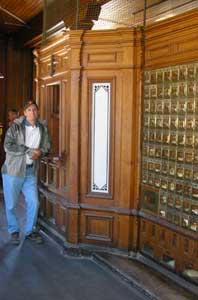 On the
right and left is one of the fanciest post offices I have ever seen.
The boxes even have bevelled glass. On the
right and left is one of the fanciest post offices I have ever seen.
The boxes even have bevelled glass. |
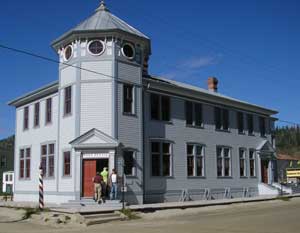
This is the original post office built in 1901. It's beautiful.
|
A picture of the original building.
|
Parks Canada has spent a few dollars here to
restore and reproduce some of the history. I think it is all worth it.
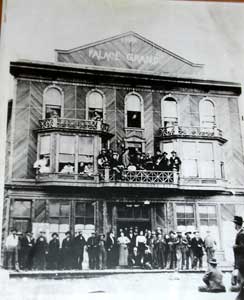
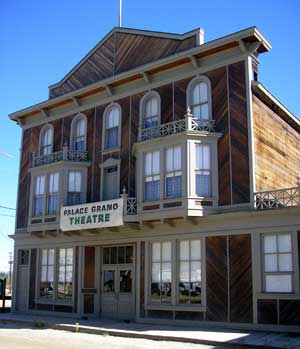
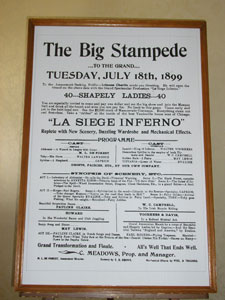
There is a lot of history to tell here. For example: On the right is the Palace Grand Theatre,
a restored building, since the Permafrost destroyed the original one.
There was a lot of
entertaining and bellying-up to the bar with your poke of gold, and "Arizona Charlie" was the brains behind it. |
 |
 |
 |
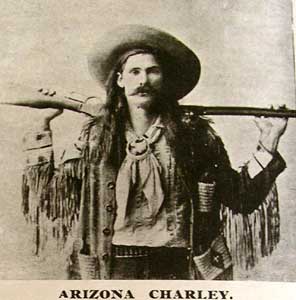 |
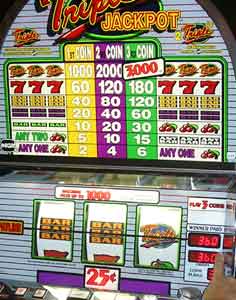
I gambled $9 and won $94. I was so excited that I picked up all my
quarters and left. |
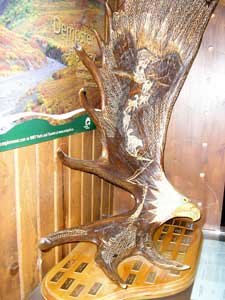
Carvings done on moose horns. |
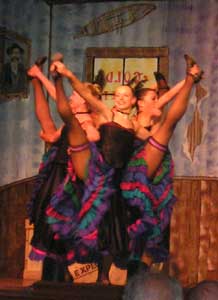 Entertainment
at Diamond Tooth Gerties Gambling Hall. Entertainment
at Diamond Tooth Gerties Gambling Hall. |
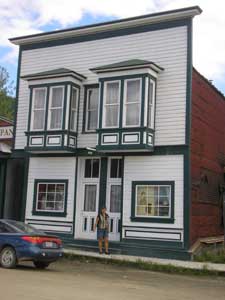
Right is: Ruby's Place. Opened as a boarding and laundry in 1903, the building was
taken over by Mathilde "Ruby" Scott in 1935. For 27 years, this former
Paris Madame operated a brothel here, finding a ready clientele in the
seasonal workers from the gold dredge camps. She operated with the
tacit approval of local officials until 1961.Ruby was charged with keeping a bawdy house
and closed as the last brothel in Canada.
|
 |
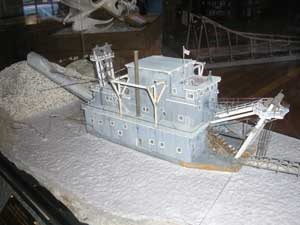
This is a model of dredge #4 that we had toured. These machines were put into rivers and creeks and it's job
was to remove all the gold from the gravel beds. This one was the
largest. I paid itself in the first month of operation and ran until
the mid 50's. |
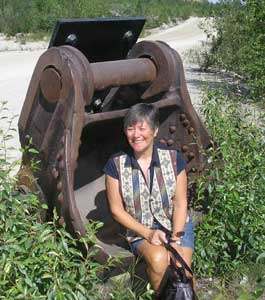
This is one of 69 buckets on dredge #4. this chain of buckets
would run 24 hours a day and process all the gravel from the
rivers and banks. Parks Canada is currently restoring this dredge.
|
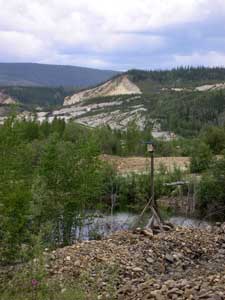
They have starling bird houses everywhere to feed off of the
mosquitoes. What a neat idea.
Now if you look at the hills in the back, you will see the sand/gravel has all
been dug up. The gravel is removed to the bedrock
and feed into machines e.g. large screening and
sluicing machines.
The gold being 19 times heavier then gravel should be at the bottom of
the wash. But tons and tons of earth have to be washed to get a minimal
amount of gold. These are the modern gold miners, called placer miners
and we were very fortunate to have met one such group. |
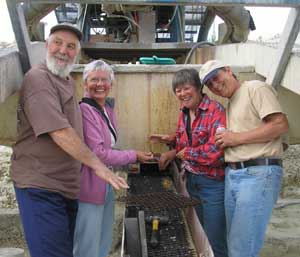
We met up with Richard and Luce last Fall on the Natchez Trace and
being from Dawson, told us to "look e'm up if we're in the 'hood".
Well...they gave us a really good tour of a modern gold
mine placer operation. In this picture is a shaker/sluice with
racks/rugs on which the gold is separated from the gravel. Look
closely... in this picture, is a bunch of gold under Denis' hand which
he is trying to grab.
|
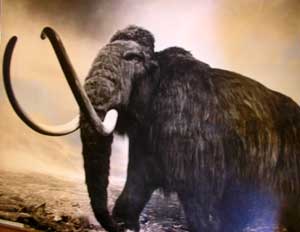
This is a Woolly Mammoth. A lot of times
it is placer miners who uncover their remains - the ivory tusks. A lot
of them have been given to museums but there is so much that a lot gets bought up and
are then beautifully carved.
|
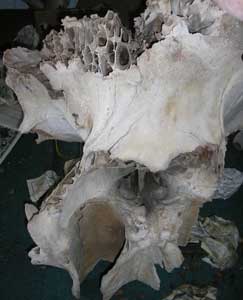
Here we have a brain of a Woolly Mammoth. The picture does not really
show the enormous size of the animal.
|
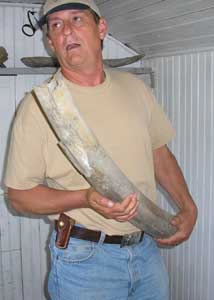
Denis is holding part of a tusk.
|
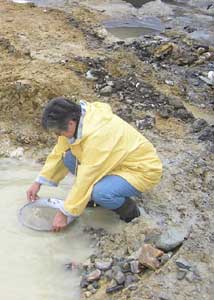
Here I am trying my hands at panning with no luck. But look next door
and you'll see what did come out of this gravel pit.
|
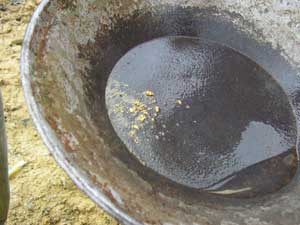
This is a very, very, very good days pan. A once in a life time catch.
With a little help from his friends, Denis was able to leave Dawson
City with a small "poke" of gold, about 1/4 ounce, after
panning the pit for hours in the c-o-l-d rain. Told you he had gold
fever.
We are very grateful to the
wonderful people we met in Dawson and the owners of this placer gold
mine, as they really helped make this part of our
journey very memorable. |
|
The Klondike
Read all about it... Denis got the gold bug and had to get it out of
his system by writing a recap of the
Klondike. |
| Monday, July 10, 2006. We are now at Five Mile
Campground (CG). We're about 200 kms south of Dawson and 50 kms off
the highway. This is a municipal CG that is only 2 miles from the
town of Mayo. Mayo is a government base for central Yukon. There is a
nice swimming lake here an a lot of the towns people come here to
swim. So far they are very respectful of the campers and
leave early so as not to disturb us and we get a really good night's
sleep. but the Ravens are quite amorous and act as roosters in the early
mourning. From here we travelled up an old mine road to
the City of Keno. Keno houses 15 residents, but it's
population use to be 800. Keno was incorporated in 1902 making this a
city. |
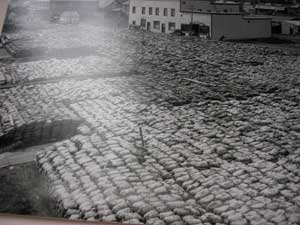
Mayo was once the shipping depot for the local silver mines. In this
picture you see sacks of silver concentrate waiting to be shipped.
|
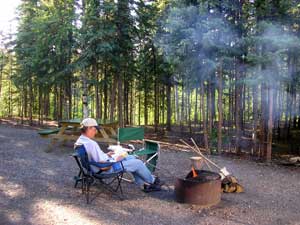
Just relaxing by our campfire. Look at the skinny but dense trees.
There is an area towards Keno called the Thermokarst lakes, where the
Permafrost has melted and the banks of the lakes collapse and trees
topple over. They're also known as the "drunken forests". |
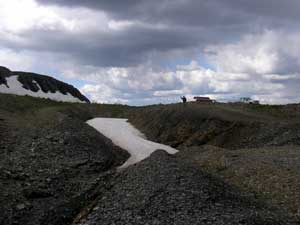
We in Keno now, and drove up a summit road, elevation 6600, just past Keno where there's still
snow in the middle of July.
|
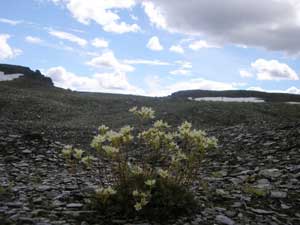
There is still flower here, I am sure due to the long daylight hours. |
|
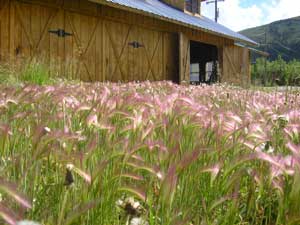
The plants you see here is called horsetail. It is a beautiful reddish
color when at it's peak and sways with the wind. This plant is deadly
if eaten by pets or animals. It does not degrade and is like glass
which will cut-up your insides. |
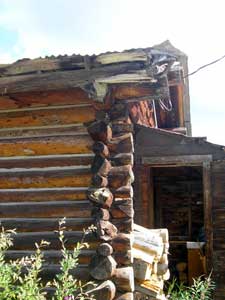
So many beautiful old log cabins in Keno. |
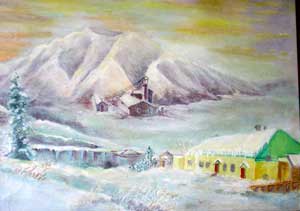
A lot of art and most about mining.
|
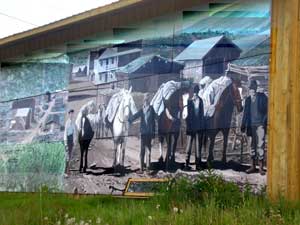
Art even on sides of buildings.
|
| Thursday, July 13, 2006. We are staying at Frenchmen
Lake off Frenchmen Rd., off the Campbell Highway near Carmacks heading
towards Whitehorse. It is such a beautiful 14
km. lake, we feel like we're in 7th. heaven. The campgrounds in the
Yukon charge $12 and they supply the firewood. The campgrounds are
very spacious, and most have wild roses planted nearby. The people are nice and very helpful. |
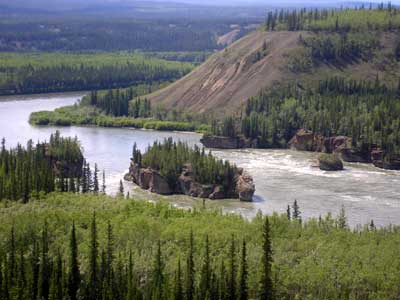
This is the five-fingers rapids of the Yukon river, where the Steamers
had to navigate through with supplies and the gold miners of the
Klondike. |
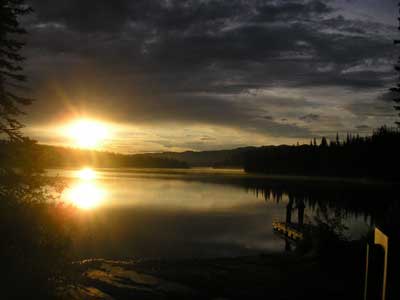
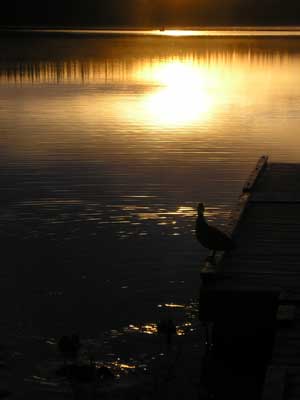
View of Frenchman's lake, and the dock at midnight!
|
| |
|
| Monday, July 17, 2006. We have enjoyed staying here
so much that we hate to leave. Denis keeps saying "can it get any
better" but we must. We have decided to start heading to B.C., we
should get to Whitehorse to-day and replenish on food and maybe a
haircut. I looked into a haircut in Dawson City but I refused to pay
$25 - $27 for a cut. $20 is my limit. |
| Monday, July 17, 2006. We have decided to stay at Fox
Lake CG, just north of Whitehorse. It is such a beautiful campground. So
far the Yukon has the most beautiful CG, especially for families,
someone has put a lot of thought into them except they do not have
dump stations or potable water. Up to now we have only been
comparing parks with Ontario Parks. We do not like the Ontario Parks
and the main reason being that reservations are required, and there
are very expensive, and I do not
think they are very large/privates sites like we have seen in the
Yukon. |
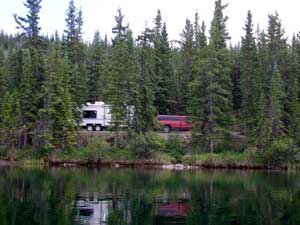
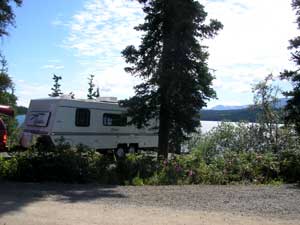 This
was our campground at Fox Lake, right on the water and mountain
view. As Denis says "can it get any better". This
was our campground at Fox Lake, right on the water and mountain
view. As Denis says "can it get any better".
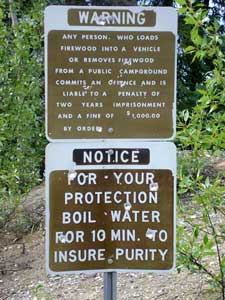
The Yukon Provincial Parks are $12.00 per night with no Sani-dumps
and sometimes there's a hand water pump. You have to go to a regular trailer park
and pay a fee to dump your black water and get potable water. We paid
$3.00. |
|
|
| Tuesday, July 18, 2006. We are now on our way towards
Watson Lake and then we will go into British Columbia (BC) on the
Cassiar Highway. We stopped over in Whitehorse as Denis needed a new
tire on the trailer. It went bald on us! Whitehorse haircut = $35. I guess I will let my hair
grow for now. Well our plans have a way of changing. We met up with
our Quebec Connections, Pierre and Judy, south of Whitehorse. They also were in
Whitehorse doing some maintenance before going on the road. With luck
we met and decided to go fishing with them in Tagish Lake. Pierre says
he is determined to get his trout. As it turns out, Pierre also had to
buy a new trailer tire, and he was at the same shop I was at, only
earlier same day. No wonder we keep on meeting on this trip! |
|
Side trip to Atlin and Snafu Lake |
| Wednesday, July 19, 2006. On the Atlin Rd. in Snafu
CG. |
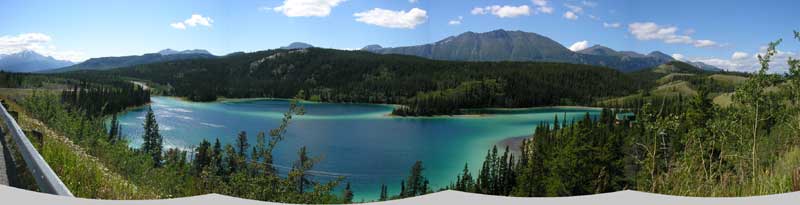
Emerald Lake along the way to Tagish Lake. The combination of Coral
and Lime create the emerald green coloring in the waters.
What a beautiful sight.

The four of us decided, democratically, that the fish is not in Tagish Lake
so we went to
Snafu Lake on the Atlin Rd. We will visit Atlin from there.
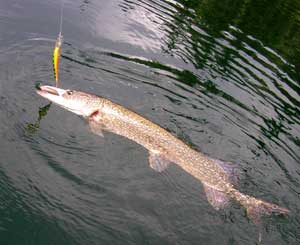
This is what the lake looks like. Denis and Pierre spent most of the
day fishing. Rub-a-dub-dub-two-men-in-a-tub.
Denis left his tackle box in the canoe overnight at Snafu Lake
CG and someone stole it so he will have to slowly build it up again.
Now you know what to buy Denis for Christmas. |
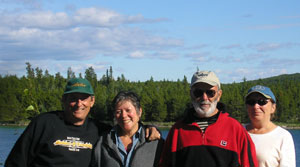
On the road again. We're on the road again. Pierre why are you so
serious in your pictures. You have such exquisite taste in foods
I wish my dad would have been able to meet you. He loves to cook for
people and have them taste it. |
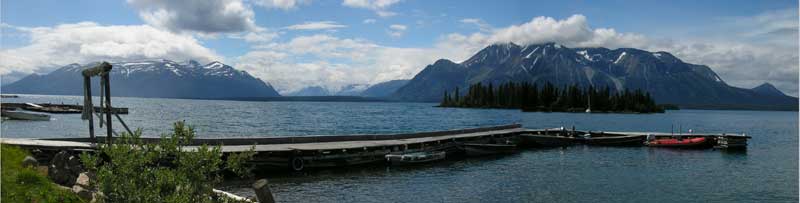
This is a view from the town of
Atlin, beautiful, isn't it. Almost
makes you want to move here. It is the middle of July and it's only
about 17 or 18 degrees here. We are camped about 75 km. north of here
which is in Yukon but Atlin is in B.C. |
| Friday, July 21, 2006. We head east towards Watson
Lake, Yukon and then down the Cassiar Highway into B.C. |
Home l The
Beginning
l Next
|